
Sylvgheist Maëlström interview: ‘An evocation of intangible time’

Sylvgheist Maëlström
Sylvgheist Maëlström is a French solo project led by Julien Sylvgheist, whom I’ve been following since his first album. From the very beginning, I was struck by his deeply personal approach to Industrial music. Over the years and across various releases, that impression has never faded. It’s not a purely Industrial sound, but rather a solid foundation that merges seamlessly with other influences —and that is precisely what defines Sylvgheist Maëlström’s strength and visionary edge. On “Grieve”, his fifth release on Hands and seventh album to date, Julien delivers a personal and introspective work in which, atop the Industrial base, he weaves elements of Trance, Tribal, and Cinematic music. The result is a diverse yet cohesive album —a remarkable achievement that I can only recommend. I spoke with Julien about it. (Courtesy by Inferno Sound Diaries)
Q: Your latest Sylvgheist Maëlström album comes about 15 years after your first official release, “Lahar”. Since then, you’ve come a long way and become an established name on Hands. Looking back, how do you see what you’ve accomplished so far? And what advice would you give to the younger Julien you were back then?
Julien : My view on my journey? With Hands? And after 7 albums released since 2010?
- “Lahar”, label Connexion Bizarre, 2010
- “Moraine”, Autoproduction, 2011
- “Skaftafell”, label Hands Productions, 2012
- “Pripyat”, label Hands Productions, 2014
- “Norillag”, label Hands Productions, 2018
- “Gandrange”, label Hands Productions, 2022
- “Grieve”, label Hands Productions, 2025

The path for Sylvgheist Maëlström began with the discovery of a hardware machine, which was the trigger; my desire to produce was very strong (8 demos since 1995). The concept Sylvgheist Maëlström, created in Sweden during my architecture studies, set the direction: the type of sound and rhythms, and the visual themes (natural and industrial disasters).
My first Sylvgheist Maëlström production, “Lahar”, allowed me at the time to establish myself within the Electro-Industrial scene. With “Moraine” (a self-produced Sylvgheist Maëlström CD), my goal was to have my productions released by a recognized label. The collaboration on the cover artwork with graphic designer Mathieu Orioli, as well as the mastering by Herman Klapholz (Ah Cama-Sotz), helped me professionalize my production. That’s still what I’m constantly striving for in my experiments: improving the sound and testing sonic accidents.
Few preconceived ideas dictate the composition; the collage of sounds and the search for textures guide each creation. I immerse myself in listening to numerous projects, recording sounds outdoors to spark an idea —a visual or sonic concept.
My advice to the young Julien of that time would be to always continue experimenting, exploring sound synthesis without ever trying to follow trends or styles. Back then, I used to produce a lot of tracks that were never finished; my production process has changed. Today, a track that’s started must be completed —never abandoned— even if it means returning to it several times, dissecting it, reworking it, wringing it out, and finally giving it its own universe.
The multiplicity of sound layers requires stripping down the pieces in order to dress them again with only the essential. The track must sound the way I hear it. The combination of polyrhythm (inspired by Meshuggah) and the structuring of sound layers (inspired by Orphx) remains a key reference in my production approach.
Q: I started with that question because the new Sylvgheist Maëlström album “Grieve” touches on the theme of melancholy — something that often resonates more as people get older and reflect on the past. How does that theme relate to you personally? And to what extent does music serve as an outlet or emotional regulator, especially when dealing with inner struggles?
Julien: The melancholy expressed in the title “Grieve” refers above all to the memory of close family members I have lost. It also extends to all those who have perished in natural and industrial disasters (themes reflected in the videos I use during live performances). As with “Norillag”, I begin with personal history in order to then speak about History itself.
Music thus becomes an expression of my reflections and my experiences; it helps me to articulate my deepest convictions.
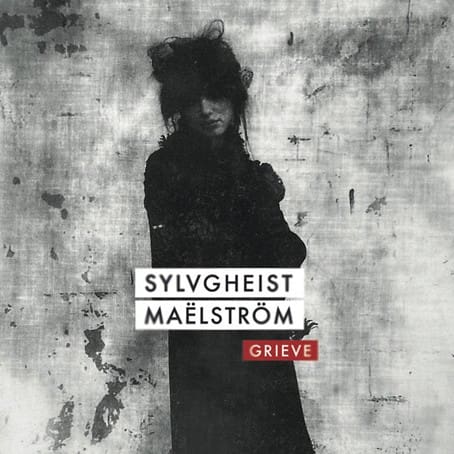
On this Sylvgheist Maëlström album, the thematic thread became clear through my readings (notably Kundera) and through conversations with the photographer Ania Fichera —whose work explores the passage of time, memory, and aging— and who created the album cover image. The valuable contribution of Bertrand Robion’s photographs brought in an entire visual universe that, for me, connects to family, to intimacy, and to personal history.
Q: You mentioned the influence of Milan Kundera. What draws you to Kundera’s work —and perhaps to the man himself— and how have you tried to translate that into music?
Julien: One of the themes explored by Milan Kundera —the passage of time, memory, and the remembrance of things and loved ones in “Testaments Betrayed”— served as a trigger for mental imagery and ultimately unified the entire album.
The present moment does not resemble its memory. Memory is not the opposite of forgetting. Memory is a form of forgetting. This reflection by Kundera resonates deeply with me —it reminds me of my own ability to transform, to forget, and to reinterpret my memories.
I wanted to create a strong contrast between the album’s imagery and the tracks themselves. From that contrast emerged a central concept: the ambivalence surrounding the notion of grief, which has haunted me in recent years.
This turmoil echoes: distorted memories of intangible realities —the melancholy of lost moments, dear to us all. It refers to the fragments that construct personal history, and to the loss of bearings that follows the death of loved ones.
The brutality of loss itself —the disappearance of loved ones and the roots they represent (personal and collective history). It is both an awakening and a meditation on memory and remembrance.
To anchor –to ink– to leave a mark on one’s own story. To mark time –the moment.
The pieces on “Grieve” are an evocation of intangible time —elusive, slipping through our fingers, unstable and without roots.
Q: Tell us a bit more about the production process of the Sylvgheist Maëlström album “Grieve”. How did it unfold? Were there any significant changes in your approach to composing or your general way of working?
Julien: The production process unfolded in two stages:
First, a phase of composing the initial tracks throughout the festivals where I perform —with each appearance, a new piece is created. This approach allows me to constantly question and renew the live experience without repeating myself.
Then came a second phase, one of reappropriating these new pieces, now connected by the album’s overarching theme. At that point, a second, more introspective production process took place —one that required a focused, mental recentring.
Q: I found your new Sylvgheist Maëlström work to be perhaps your most diverse yet, in terms of influences and genre blending. How do you see this album within the context of your evolution as an artist, and your overall discography?
Julien: The diversity stems from this long-term production process. Each track is directly connected to very different moments in life.
Every new piece is an attempt to find its own singularity in relation to the previous ones —each time, sound synthesis becomes a new field of exploration. Artistic evolution is constant; with every track comes a new stage of transformation.
Q: You’re not an artist who releases new material every year. How do you spend your time between releases? And what does the near future hold for Sylvgheist Maëlström?
Julien: My project Sylvgheist Maëlström sets the rhythm of my nights. By day, I work in an architecture firm, designing public facilities.
Despite the time between releases, the composition process is continuous —it precedes every live performance at festivals.
In the near future, I’m focusing on finding opportunities to perform live at festivals in England and Portugal with Sylvgheist Maëlström, where I haven’t yet played.

I have been working for over 30 years with Side-line as the main reviewer. My taste is eclectic, uncoventional and I prefer to look for the pearls, even if the bands are completely unknown, thus staying loyal to the Side-Line philosophy of nurturing new talents.
Since you’re here …
… we have a small favour to ask. More people are reading Side-Line Magazine than ever but advertising revenues across the media are falling fast. Unlike many news organisations, we haven’t put up a paywall – we want to keep our journalism as open as we can - and we refuse to add annoying advertising. So you can see why we need to ask for your help.
Side-Line’s independent journalism takes a lot of time, money and hard work to produce. But we do it because we want to push the artists we like and who are equally fighting to survive.
If everyone who reads our reporting, who likes it, helps fund it, our future would be much more secure. For as little as 5 US$, you can support Side-Line Magazine – and it only takes a minute. Thank you.
The donations are safely powered by Paypal.


