
Assemblage 23 Interview: ‘We’re all a bunch of big, dumb monkeys’

Assemblage 23
Assemblage 23’s Tom Shear is one of those artists who needs no introduction. Since his first album, “Contempt”, released in 1999 under the name Assemblage 23, he has become known worldwide within the Electro underground scene. He introduced a sense of innovation through carefully blended EBM and Electro/Wave-Pop influences. The label ‘Future-Pop’ was quickly adopted—a genre within genres that today is rarely discussed, except with a touch of nostalgia. Tom Shear went on to create several acclaimed albums and club hits.
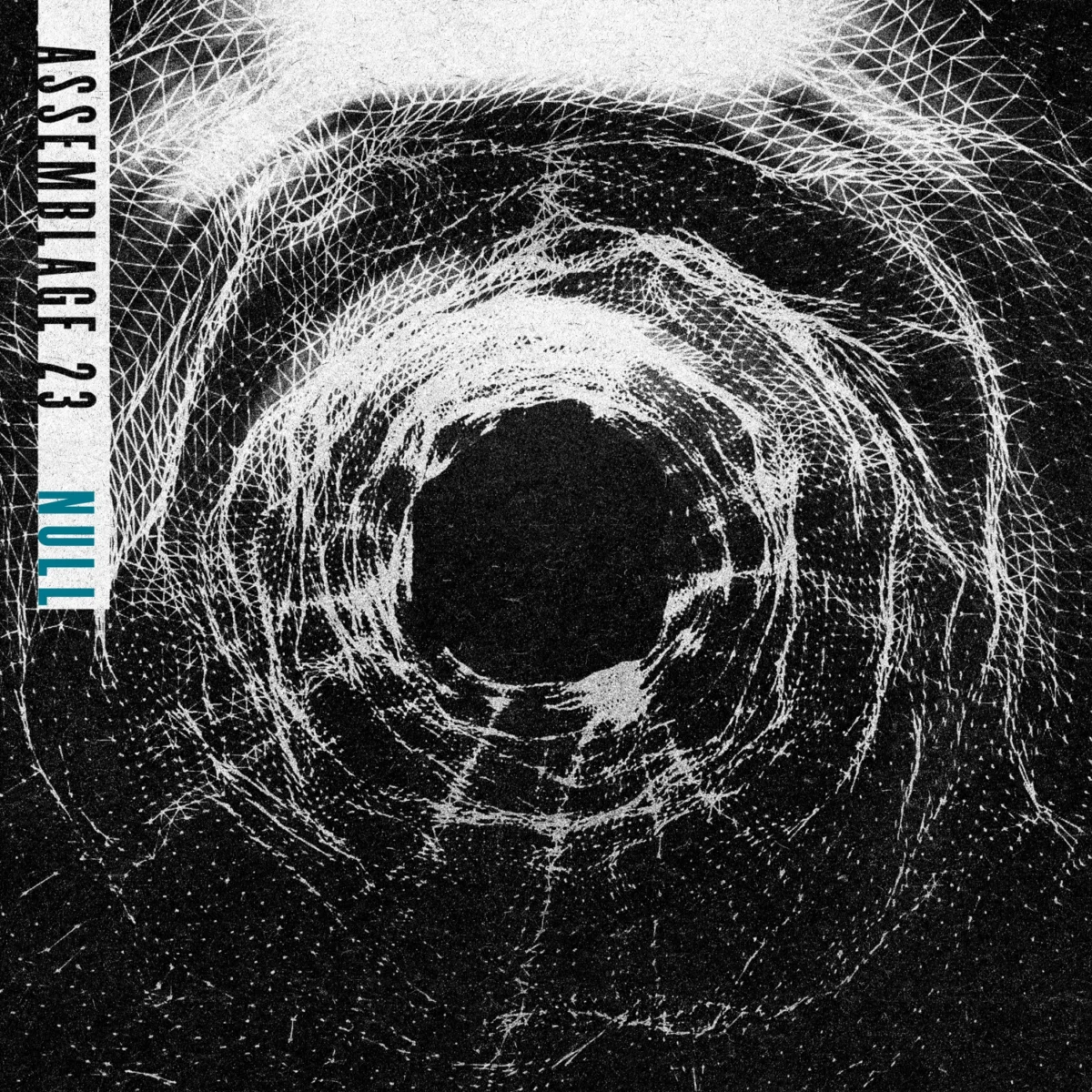
This year, we welcomed the Assemblage 23 album “Null”, released on Metropolis Records. It is already Assemblage 23’s tenth album, and once again it sounds like a true tour de force. The songs move between floating, atmospheric moments and harder, sometimes rawer, dancefloor-oriented tracks. The lyrics, delivered by Tom Shear in his naturally charismatic voice, are equally substantial. Tom Shear doesn’t just speak through his music – his lyrics have something to say as well. Tom explains more in the following interview. (Picture credits by Mari Shear / Interview courtesy by Inferno Sound Diaries)
Q: “Null” is now your tenth Assemblage 23 album. What was the initial impetus or starting point for this release? Do you usually have a clear idea in advance of how a new work will sound and which themes it will explore? How did that process unfold this time?

Tom: No, I really have no idea how it’s going to turn out until I am nearly done. The seed that starts things off is just an idea. I sketch things out over time for ideas that I think might have promise and one day I just start to flesh it out. Sometimes, even after I think I have a good start, I might decide I need to scrap it and start over. I’m always sort of guided by this nebulous idea of what the song will end up sounding like, but a lot of times that changes as the songs develop and new possibilities reveal themselves.
Q: The title “Null” can be interpreted in many ways and feels like a powerful metaphor. What exactly lies behind it for you?
Tom: I like the duality of the word and words like ‘zero’ or ‘nothing’. Whether the absence of something is a positive thing or a negative thing depends entirely on context. I think in some ways, it’s a good metaphor for the way the world works. We’re always so tempted to want things to be simple or black and white, but reality is nuanced and complex. I think the way so many look past the nuance and context of things is a good part of why the world is in the state it’s in now.
Q: The content of your writing has always felt important — often reflecting a critical awareness of the world, but also of yourself. What meaning, value, or power do your lyrics hold for you in terms of processing or regulating your own emotions?
Tom: I never wanted to write lyrics, and if I’m being totally honest, I still really don’t. I find it the most challenging and least ‘fun’ part of creating a song, but I also strongly believe that you need to put as much effort into the words as you do the music.
The world doesn’t really need more songs with shitty lyrics, so I always stress myself out about them. But the end result, if I come up with something I’m really happy with, is a good feeling, and there’s no question that it can be extremely cathartic to get something that’s been weighing on you out of your head and into a song. But honestly, the greatest reward is hearing from a fan or someone who found comfort or meaning in something I wrote. That’s the part that makes the difficulty of the process feel worthwhile.
Q: I sense that there is also a call for hope embedded in this Assemblage 23 album. Do you believe things can still turn out well for our world and its leaders? And what kind of influence or power do ordinary people — and artists — have within that hope?
Tom: I think in difficult times, hope is an important candle to keep burning. I don’t generally have a lot of faith in humanity. There’s no doubt we’ve achieved amazing things in our time, but those are points along a very long line where most of the time we’re acting like big, dumb, violent monkeys. I think our leaders are kind of a lost cause. It’s mostly just a bunch of wealthy sociopaths who are attracted to the trappings of power it affords them. Serving their constituents is a distant second to that, if it’s a real concern at all. Where my hope lies is with the rest of us. Yes, even in our big, dumb monkey moments, I think most people know right from wrong and justice from injustice. We have undeniable power in numbers. I just fear that things are going to have to get so much worse before people decide that things must change.
Q: Are there particular tracks on “Null,” or perhaps even one key track, that you consider essential for understanding this Assemblage 23 album as a whole — a kind of gateway to the rest?
Tom: I think both of the singles offer a pretty good representation of what the album has to say. It kind of demonstrates the balance of positive and negative throughout the rest of the album.
Q: How did the composition and production process of “Null” develop, and were there any elements or techniques that felt innovative or new for you this time around?
Tom: I usually start out with a very bare bones ‘skeleton’ of the song. Usually just some simple drums and a bassline. I’ll map out a rough structure for the song, arranging the intro, verses, choruses, breakdown, etc. From there, it’s kind of like decorating a Christmas tree, where I’m hanging new parts onto the skeleton I laid down. A lot of the time, I’ll just loop a section and start playing around with sounds until I find something I like, and gradually all those additional parts form a complete musical arrangement. When I’m pretty close to having the music sorted out, I start searching for the vocal melodies and writing the lyrics. Then, once I’ve recorded the vocals, it’s time to do the final mixdown. I tend to mix a little bit as I am writing the song, but there’s always still plenty to be done at that final stage.
As for new (to me) techniques. I took a bit of a different approach to sounds this time. In the past, I’d spend a lot of time programming a sound that had most of the qualities I was looking for. Which is all well and good, but sometimes it falls short of the ‘ideal’ I’m imagining in my head. So this time I took a more modular approach. I’d break down what the qualities of the sound I was imagining in my head, and treat those as individual instruments. So, if I wanted a bass sound with a lot of impact, with a very subby low-end, but a crisp and super-wide high-end, I’d create it out of three separate layers, with each filling its own purpose. Glue them together with a little compression, and it just sounds like a single sound that has all the qualities you wanted. I’ve always done a lot of layering, but this was a more focused approach.
Q: Speaking of innovation, AI has now firmly entered the music world. How do you view this evolution, and where do you think it’s heading — especially given the concern that creativity and talent might become secondary?
Tom: That’s the one thing that baffles me about AI. We have this tool that has the potential to relieve us of the things we hate doing, and yet so many people are using it to replace what’s supposed to be a joyful and fulfilling process – making something from nothing. Creativity isn’t just plopping out the end result in a single go. Creativity is the process. The end result is only the way it is because of that process. This is why I say we’re all a bunch of big, dumb monkeys. We could be using this to solve mankind’s greatest problems. Or, we could use it to draw a picture of what Abraham Lincoln would look like with big tits. Guess which one more people are doing?
Q: Your music feels, more than ever, like a fusion of different influences. What actually shapes your compositional process for Assemblage 23, and do you work with specific references or criteria in mind?
Tom: I think what constitutes a musician’s ‘style’ is really just a collection of the things they’ve absorbed from records they’ve heard over the years that made an impression on them. The stuff you like, works its way into your sound, and the stuff you don’t, doesn’t. And if what you imagine doesn’t exist, then you have to create it from scratch, but it will still be going through that filter of all those little musical lessons you learned from other people’s music. I don’t usually have a strict idea of how a song is going to sound from the start. Just a general tempo and a chord progression. If I get stuck, the first thing I always do is throw on the ‘discovery’ station on Apple Music and skip around until I find something that catches my ear. Then I see if there’s a way to apply something from that song to what I’m working on.
Q: After all these years and now ten Assemblage 23 albums — not counting your side projects — what keeps your creativity sharp? And how essential is the drive toward innovation for you?
Tom: I’ve always liked the comparison of creativity to a bucket. Not necessarily that creativity is a finite resource, but that it’s important to refill it frequently. That can be from seeing live music, watching a film, reading a poem, or anything that has the ability to provoke thought and inspire you. I’ve always felt that A23 is in a constant state of refinement. I’m not looking to turn music on its head and create a never-before-heard genre. I just want to make music that sounds good to me. As time goes on, I learn more, I get better tools, and I get a bit closer to that ‘perfect’ song all of us musicians strive for, but realistically know we’ll never attain.
Q: Your wife, known to many as Mari Kattman, is an artist in her own right. To what extent is she your first listener and critic? And how much do you influence each other’s ideas and creative decisions?
Tom: She is for sure my first listener and critic, and the same is true in reverse. We’re coming from different places and have different opinions, but we always try to offer each other constructive feedback. The best feedback is when I hear her humming something I was working on or I wake up in the morning telling her I couldn’t fall asleep because I had a song she’s working on stuck in my head.
Q: What does the future hold for your joint project Helix, and for Assemblage 23?
Tom: I’m slowly, but surely getting started on working on some new material. It always takes me a while to transition from working on A23 stuff to Helix stuff, for some reason, so I have no real idea of when I’d be shooting to get something out. It’s too exhausting to think about after just having finished “Null” not so long ago.
Q: As we approach a new year: apart from “Null,” what do you consider the most important musical event of 2026 — and what were your favorite songs or albums of the year?
Tom: For me, the only musical event for most of this year was finishing this album. I pretty much completely tuned everything else out so I could stay focused. So I have a lot of catching up and listening to do! Ask me next time! I’m sure I’ll have some new favorites.

I have been working for over 30 years with Side-line as the main reviewer. My taste is eclectic, uncoventional and I prefer to look for the pearls, even if the bands are completely unknown, thus staying loyal to the Side-Line philosophy of nurturing new talents.
Since you’re here …
… we have a small favour to ask. More people are reading Side-Line Magazine than ever but advertising revenues across the media are falling fast. Unlike many news organisations, we haven’t put up a paywall – we want to keep our journalism as open as we can - and we refuse to add annoying advertising. So you can see why we need to ask for your help.
Side-Line’s independent journalism takes a lot of time, money and hard work to produce. But we do it because we want to push the artists we like and who are equally fighting to survive.
If everyone who reads our reporting, who likes it, helps fund it, our future would be much more secure. For as little as 5 US$, you can support Side-Line Magazine – and it only takes a minute. Thank you.
The donations are safely powered by Paypal.


