

Orphx - Raised on blues and rock, I discovered electronic music as something that sounded totally alien and thrilling… - interview at SIDE-LINE

Orphx - Raised on blues and rock, I discovered electronic music as something that sounded totally alien and thrilling…

Industrial Music CDs at eBay USA | eBay UK | eBay DE

10 Feb, 2009 [ Views: 27440 ] Share

Orphx - Raised on blues and rock, I discovered electronic music as something that sounded totally alien and thrilling…
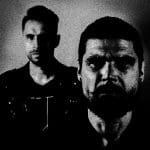
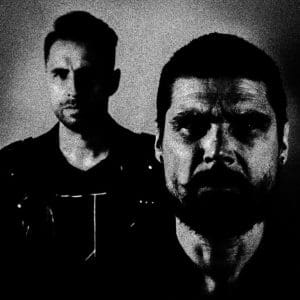
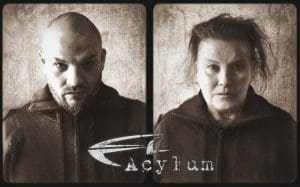
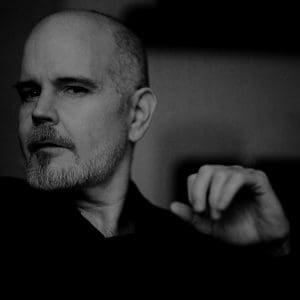
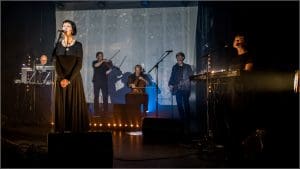
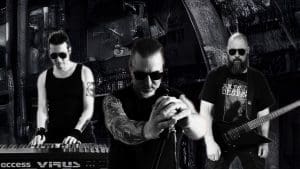
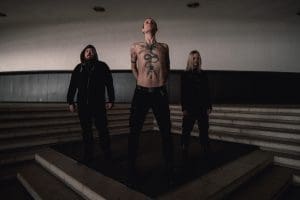
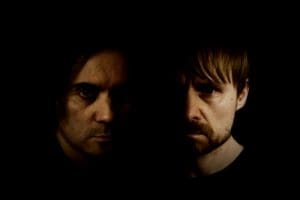
Richard Oddie and Christina Sealey are active under the Orphx-moniker for quite a lot of years now. Their sound went through numerous evolutions like an urge to express numerous musical ideas animated by a wide spectrum of influences. Orphx sounds a bit like a painter who has different periods during a lifetime. From industrial to experimental to minimal techno to dark electronics to dub, nothing seems impossible to this Canadian project. Orphx became one of the absolute leading projects from the industrial scene and their "Teletai"-album is a good way to move back in time re-discovering all their influences. "Teletai" is a collection of rarities and other less familiar tracks, but perfectly illustrating their evolution in time. We contacted frontman Richard Oddie for the first Side-Line interview ever with Orphx! (By Stéphane Froidcoeur)

SL : How did you get the idea to release the "Teletai"-album ?

RO: It simply seemed like time to re-release some of the more rare material that we've produced over the last fifteen years. "Teletai" includes tracks from various compilations and limited edition vinyl releases. I liked the idea of creating a second disc of remixes from some of our favorite electronic artists. I'm very pleased with the remixes and the release as a whole.

SL: Do you have some more 'rare' and/or 'deleted' tracks in your wide discography you would like to re-release?

RO: While we're concentrating on new material right now, I would like to re-release more of our older work, including our early cassette releases, the Antiform side-project, and various live recordings.

SL: What does an album like "Teletai" -were you'd to go back in time- evoke to you?

RO: I've tried to provide an overview of the different influences that have shaped our music and the different periods and styles that we've moved through and combined, from our earlier, more overtly 'industrial', work to the more recent exploration of techno, electro and dub. Listening to and remixing all of that material was a really good experience, because it gave me a better sense of the recurring themes in our work and brought back memories of the different periods when these songs were created.

SL: What do you think about the idea to change and/or improve some elements of 'older' songs or do you think it's better to leave them in their original version?

RO: We tried to do both with this release. Disc 1 contains older tracks that have been re-mastered to enhance sound quality, while the second disc allowed other artists to use these tracks as starting points for their own compositions. I wanted to present the older material as it was but I really like the idea of reworking our own songs, taking elements here and there and integrating them into something new. This is a big part of how I work.

SL: How would you analyze the evolution from the Orphx-sound throughout the years?

RO: My partner Christie and I started the project in late 1993 with our friend Aron West. We were bringing together influences from early industrial (esp. SPK, Throbbing Gristle, Einsturzende Neubauten, Laibach), ambient industrial (esp. Zoviet France, Coil, Lustmord), EBM (esp. Skinny Puppy, The Klinik and Clock DVA), the 90s tape culture and resurgence of noise music (e.g. Merzbow, Aube, RRRecords), and extreme metal (esp. Swans, Napalm Death, Godflesh). We were experimenting with different instruments, whatever we could find and scavenge. This was a really inspiring time. As we learned more about sequencing, Christie and I were taking more and more influence from minimal techno and acid house and we began trying to integrate some of these influences into our 'power electronics'-style, while Aron pursued more free-form noise experimentation with his project Tropism (which has just released a very limited DVD series of the 300 albums he has produced since 1993!). Following the release of "Fragmentation" on Malignant (1996), elements of techno, electro and dub became increasingly prominent, but still within the context of industrial and experimental music (Vita Mediativa 1998). Since that time, I've seen Orphx as an attempt to bring together elements of electronic dance music and more experimental traditions, particularly electro-acoustic and early industrial music. Of course, these traditions were more closely connected in the 1970s and early 1980s and I take a lot of inspiration from that period.

From 2000 to 2002, I became really immersed in acoustic ecology, an approach to electro-acoustic composition that tries to explore the relationships between society and nature through sound. This resulted in "The Living Tissue"-album and video project (2001) and the "Surface" (2000) and "Other Voices" (2002)-12"s. Much of this material was quite 'ambient' and I've since moved back into a stronger focus on rhythm, while integrating the use of location recordings that tie into the themes that I'm trying to explore with each release. I'm proud of "Circuitbreaking' (2003) and "Insurgent Flows" (2005), which are essential two parts of a single idea, because I think these records have begun to draw all of these influences together. This is what I've been trying to develop in the last couple of years and I hope that this synthesis will be more evident on the new releases we have planned for 2009. Christie and I have also been working together more in the studio, which is very exciting. For the past ten years, our live performances have been collaborative but the bulk of the studio recording has been done by myself, so this is significant development for us and I'm very excited to hear what comes out of this studio collaboration.

SL: What has been the importance of other musical influences in the history and sound of Orphx and what have been your main influences?

RO: In addition to the groups and traditions I mentioned above, I would point to the dub techno sound of labels like Basic Channel, Chain Reaction and Sahko, early dub productions by Lee Perry and others; electro by Drexciya, Dopplereffekt, Der Zyklus and associated groups, and more recent experimental work by artists like Thomas Koner, Fennesz and Ryoji Ikeda.

SL: Do you remember what incited you to start making music and especially to the sound and style of Orphx?

RO: As I said earlier, our early work was an attempt to combine influences from early industrial music, electro-acoustic music, and power electronics with elements of techno and dark electro. This is still the operating principle. Christie and I actually began making music together in about 1990, under the name Your Waking Dream - this was a 'noise pop' group with more traditional instrumentation, inspired by groups like Slowdive, Ride, Sonic Youth and My Bloody Valentine. This is still a huge influence for both of us and we have been writing material in this vein for the last few years with the intention of reinventing this project in the very near future, and perhaps combining elements of this 'shoe-gaze' sound with the rhythmic elements of Orphx.

SL: Richard, I read that you father was a blues harmonica player. I guess it's an instrument kids really like, but what kind of impact did it have on you and your evolution as musician?

RO: Both my father and my stepfather were blues musicians and avid music collectors, so I grew up listening to blues, rock and jazz, and surrounded by instruments. Of course this had a huge influence on me and introduced me to a lot of great music at a young age. For various reasons, my parents made an effort to steer me away from making music a career but I was always drawn back to it. Raised on blues and rock, I discovered electronic music as something that sounded totally alien and thrilling, and this is what first motivated me to really want to make music. More recently, I've rediscovered my love of blues, rock, jazz and folk music, and feel fortunate to have been surrounded by such great music early in life.

Content Continues Below

Get your industrial music CDs at the following eBay sites:

eBay USA eBay België/Belgique
eBay UK eBay France
eBay DE eBay Nederland
   

SL: On your myspace profile you listed Jeff Mills as one of your influences. What do you like in this man's work and where did you feel to be influenced by Jefff Mills?

RO: Jeff Mills was a big inspiration for me during the 1990s. You can hear strong parallels with industrial in his approach to techno and that sound really appealed to me. I was also very inspired by the Underground Resistance label that Mills co-founded, both for their focus on harder, darker electronic music and their efforts to politicize techno as something that stands in opposition to the mainstream corporate music model and the marketing of music as nothing more than a commodity. I really appreciate their efforts to present techno and electro as music that is about understanding the present and thinking about the future, in all of its uncertainty and danger. This kind of depth and tension runs through the work of Mills and related artists such as Drexciya and the Basic Channel crew in Germany. These artists all had a big influence of my music and continue to do so.

SL: Acid music remains another influence, but how do you transpose such an influence in the sound of Orphx?

RO: This was a related influence from the same period in the early 1990s, when we were discovering techno, house and electro through the rave scene in Toronto. At this time, there was a vibrant scene for underground parties and we had some amazing experiences at those events. Acid house was the sound that I was really drawn to at that time alongside the harder sounds of people like Jeff Mills and Surgeon. I should say the darker aspects of acid house - artists like Teste, Plastikman, DBX, Mika Vainio and a lot of the releases on Underground Resistance, Probe and Sahko were taking the acid sound in a very dark, hypnotic direction and I'm still addicted to this kind of sound and atmosphere. It makes your body move but is not party music - it is pure trance music that, under the right circumstances, takes you on a trip into your psyche and into your problems, not away from them. I think of this as psychoacoustic music and it is exactly the kind of atmosphere that we are trying to create with Orphx - music that moves mind, body and soul but is about ecstatic confrontation with reality and all the pieces of one's self, not escape.

SL: How would you explain your evolution with Orphx from a rather experimental sound in the early years towards more danceable and even technoid-influenced compositions during the last years?

RO: As I've suggested, I've been consciously trying to fuse these worlds together - the more experimental techniques and sounds of electro-acoustic and industrial music with the rhythmic pulse and structure of techno, electro and dub. I see the changes in our sound as a fusion of these elements, rather than a move away from 'experimentation'.

SL: The 2nd disc of "Teletai" features 12 remixes, but how does it feel to you to hear your music adapted and remixed by other artists?

RO: It was a great experience. I contacted a lot of people who have really influenced our work and many of them agreed to be involved. I made an effort to approach a real diversity of artists that cut across the lines between industrial and techno, and I'm really happy with results.

SL: I personally discovered some amazing remixes like the one by Surgeon transposing your sound in great pieces of minimal techno-dub stuff. What do you think about it and in which way can it be an influence for further releases and/or collaborations?

RO: The remixes from artists more closely connected with 'techno', such as Surgeon, Sleeparchive and Fluxion, have already helped establish more connections for us. More and more, our sound and influences are drawing upon this kind of fusion of minimal techno, dub and electro, as much or more than the industrial scene, and we want to continue moving in that direction with future releases and performances.

SL: That brings me to ask you about your new full length announced for 2009. Can you already give us a few more information and details about its content?

RO: We've been experimenting with new material in our recent live performances, combining dark minimal techno and electro rhythms with sounds sourced from various location recordings and harsher sounds and textures, often generated by feedback systems. We're planning a 12" and a full-length for the near future that will continue on from the last two albums, but will be focused more on a mixture of electro-acoustic music and minimal techno, electro and dub.

SL: I also noticed that you'll contribute to an exhibition planned for February 2009. Tell us a bit more about this project and are you planning to compose new and/or exclusive songs for this event?

RO: Christie is a professional visual artist and this exhibition will feature a new series of her paintings along with a sound installation that we've created together. The project is based on interviews and sound recordings from around the city of Hamilton, where we live, looking at how people understand and imagine different parts of the city. The soundtrack that we've created uses processed location recordings and pieces of the interviews to create a kind of imaginary city through sound. We've tried to highlight certain themes that describe the unique character of this city and its people - its industrial past, the socio-economic divisions in the area, the decline and possible revitalization of the inner city. The Art Gallery of Hamilton will also release a limited edition CD of our work.

SL: What do you expect from this exhibition and what does it mean to you to contribute to such a concept?

RO: This is an important exhibition for Christie and it is also an opportunity for us to collaborate a bit more on sound recording and composition. In many ways, it is also a return to the 'acoustic ecology' approach that I explored with The Living Tissue, working only with location recordings and processing. I enjoy this way of working, which is quite different than composing with a focus on rhythm. At the same time, I think this project will generate new sounds and directions for Orphx.

SL: Tell us a bit more about the input of Christina Sealey?

RO: Christie was involved soon after Aron West and I started this project, using reel-to-reel tape machines and sampler. She contributed extensively to the first few releases, between 1993 and 1996, and we've also recorded material together as Antiform (releasing the "Bhavana"-cassette in 1995, playing numerous shows and recording the "S/O/S"-album with Mark Spybey in the late 1990s). Since about 1997, Christie has been focusing on her painting but has contributed sounds and ideas to almost every release. We have also continued to collaborate for almost every live performance. In the last few years, Christie has become more involved in sound recording and composition again, and we have been working on a great deal of new material together, both for Orphx and other projects. Future Orphx recordings will be more of an equal collaboration and this will no doubt take the project in new directions.

SL: After all these years of commitment, are there some 'goals' and why not dreams you would like to see come true? Which ones?

RO: We've been very fortunate so far and have had some amazing experiences and opportunities. I would be very happy to simply have this continue - more opportunities to perform around the world (especially across Europe and Asia), more collaborations with artists that I respect and admire, and more connections with people who appreciate our music. I would also really like to return to releasing my own music again. Aron and I ran a cassette label (Xcreteria) during the 1990s and I miss the experience of designing and releasing records.

SL: Orphx seems to have been influenced by the 'Orphic mystery cult' so what fascinates you here and what are your favorite parts from this cult?

RO: The Orphics built a system of belief around Orpheus, a mythic poet and musician in ancient Greece. They believed that human souls are trapped in an endless cycle of rebirth - analogous to the Buddhist idea of Samsara - but that we can be freed from this cycle through spiritual practice and purification. The notion of descending into and returning from the underworld in the attempt to gain wisdom or salvation is central to the story of Orpheus. These ideas appealed to us when we started this project and they still resonate.

SL: Right now we're at the end of 2008 so according to you what have been the main events of this year (musical wise and generally speaking)?

RO: It's been a rough year in many respects… I see some signs of hope with the political shift in the US and the departure of the Bush regime… The financial crisis is deeply troubling but also presents new opportunities for building a more humane and ecologically responsible international system for trade and finance. I won't hold my breath but there's no doubt that this will change significantly. For comfort and inspiration, my ears were tuned to a lot of fine dubstep 12"s (from Appleblim, Cloaks, The Bug, Martyn, Skream, 2562, Pinch) and excellent new albums by Deerhunter, Fennesz, Mika Vainio, Byetone, Ryoji Ikeda, Regis, Earth, Vromb and Hecq, among others.

Band: www.orphx.org / www.myspace.com/orphx
Label: www.handsproductions.com / www.myspace.com/handsproductionsofficial

Industrial Music CDs at eBay USA | eBay UK | eBay DE

Share

More headlines

Von Thronstahl releases previously unreleased material on 'Conscriptvm'

READ MORE | Posted on 02/09/10

Out in May will be a double CD of rare, unreleased, versions, new and unreleased material from German legends Von Thronstahl. (...)

John Foxx releases rare material on 'My Lost City'

READ MORE | Posted on 02/09/10

ohn Foxx has dived into his vaults to create 'My Lost City', to be released by Metamatic Records on 1 March, 2010. (...)

Tracklist limited edition Recoil's 'Selected' CD revealed

READ MORE | Posted on 02/09/10

As we previously announced, Recoil is set to release a new album on April 19 entitled 'Selected'. (...)

US Military Authorities censor interview on Side-Line - update

READ MORE | Posted on 02/08/10

We thought we had seen everything when it came to interviews, but this one was brand new. The US Military Authorities have decided to censor an interview that was to appear on Side-Line.com. (...)

Olivia Louvel releases new album 'Doll Divider', supports Recoil on tour + photo shoot by Alan Wilder

READ MORE | Posted on 02/08/10

(Picture by Alan Wilder) Olivia Louvel has recently completed a new album, 'Doll Divider', composed and produced by Olivia Louvel and mixed by Paul Kendall. (...)

Peter Hook opens new Manchester club FAC251 with New Order and Joy Division songs

READ MORE | Posted on 02/08/10

Peter Hook opened the new Manchester club FAC251 (on February 6th) with his band The Light playing New Order, Joy Division, Monaco and Freebass tracks. (...)

SUBSCRIBE TO OUR DAILY NEWSLETTER

Receive our daily newsupdates in your mailbox :


Share
Looking for a new thrills? Visit the casino online essential beginners guide for games such as blackjack online, bingo, roulette and also craps.
Advertisers

Email Newsletters & Email Marketing by YMLP.com

SponsoredTweets referral badge

Advertisers


RECOMMENDED MONEY MAKERS

THANKS TO