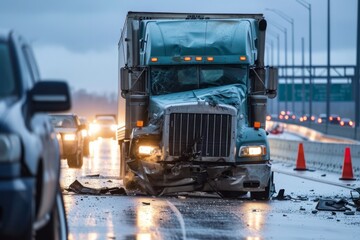
How to Estimate the Settlement Amount for Your Truck Accident Injury Case

How to Estimate the Settlement Amount for Your Truck Accident Injury Case
Truck accidents often result in severe injuries, extensive property damage, and long recovery periods. Because commercial trucks are significantly larger and heavier than passenger vehicles, the physical and financial impact of these crashes can be overwhelming for victims and their families.
On top of the medical and emotional stress, many people are left wondering what their case might actually be worth. Valuing your truck accident claim is an important step in setting realistic expectations and preparing for negotiations with insurance companies.
Estimating a settlement amount is not an exact science. Instead, it involves evaluating multiple factors that together shape the overall value of your injury claim.
Table of contents
- 1 Medical Expenses and Future Treatment Costs
- 2 Lost Income and Reduced Earning Capacity
- 3 Pain and Suffering
- 4 Permanent Injuries and Disability
- 5 Property Damage and Out-of-Pocket Costs
- 6 Liability and Strength of Evidence
- 7 Insurance Coverage and Policy Limits
- 8 Comparative Fault Considerations
- 9 Role of Legal Representation
- 10 Key Takeaways
Medical Expenses and Future Treatment Costs
Medical expenses are often the starting point when estimating a truck accident settlement. This includes emergency care, hospital stays, surgeries, medications, physical therapy, and follow-up appointments. Keep detailed records of all medical bills related to the accident.
Future medical needs are equally important. If your injuries require ongoing treatment, rehabilitation, assistive devices, or future surgeries, those projected costs should be included in your estimate. Medical experts may be consulted to calculate long-term care expenses.
Lost Income and Reduced Earning Capacity
Lost wages play a significant role in settlement calculations. If your injuries caused you to miss work, you can typically recover compensation for the income you lost during your recovery period.
In more serious cases, injuries may prevent you from returning to your previous job or limit your ability to work full-time. Reduced earning capacity considers how your injuries affect your future income over the course of your career, which can substantially increase the value of your claim.
Pain and Suffering
Pain and suffering damages compensate for the physical pain and emotional distress caused by the accident. Unlike medical bills, these damages do not come with receipts, making them harder to quantify.
Insurance companies often estimate pain and suffering by using a multiplier based on the total medical expenses or by assigning a daily value to your pain. The severity of your injuries, length of recovery, and impact on daily life all influence this portion of the settlement.
Permanent Injuries and Disability
Permanent injuries, scarring, or disabilities significantly increase settlement value. These injuries may limit mobility, require lifelong medical care, or prevent you from participating in activities you once enjoyed.
Documentation from medical specialists that explains the long-term effects of your injuries is critical when estimating compensation for permanent harm.
Property Damage and Out-of-Pocket Costs
While injury-related damages usually make up the largest portion of a truck accident settlement, property damage should not be overlooked. This includes repair or replacement of your vehicle and any personal items damaged in the crash.
Out-of-pocket expenses such as transportation costs, home modifications, or medical equipment should also be included in your estimate.
Liability and Strength of Evidence
Clear liability can significantly impact settlement value. If evidence such as accident reports, witness statements, black box data, or logbook violations clearly shows the truck driver or trucking company was at fault, insurers may be more willing to offer a fair settlement.
Disputed liability or shared fault can reduce the estimated value and prolong negotiations.
Insurance Coverage and Policy Limits
Truck accident cases often involve higher insurance policy limits than typical car accidents, especially when commercial trucking companies are involved. Multiple insurance policies may apply, including those covering the driver, trucking company, cargo loader, or vehicle manufacturer.
The availability of higher coverage limits can increase the potential settlement amount, but insurers may aggressively defend high-value claims.
Comparative Fault Considerations
In states that follow comparative fault rules, your settlement may be reduced if you are found partially responsible for the accident. Understanding how fault is allocated is important when estimating the final amount you may receive.
Role of Legal Representation
Experienced truck accident attorneys understand how to evaluate claims accurately and account for all potential damages. They also know how to counter insurance tactics designed to undervalue claims.
Legal guidance can make a significant difference in both estimating and ultimately securing a fair settlement.
Key Takeaways
- Settlement estimates are based on multiple factors, not a fixed formula.
- Medical expenses and future treatment costs form the foundation of claim value.
- Lost income and reduced earning capacity can significantly increase compensation.
- Pain, suffering, and permanent injuries play a major role in settlement amounts.
- Strong evidence and clear liability support higher settlements.
- Insurance coverage limits affect how much compensation may be available.

Chief editor of Side-Line – which basically means I spend my days wading through a relentless flood of press releases from labels, artists, DJs, and zealous correspondents. My job? Strip out the promo nonsense, verify what’s actually real, and decide which stories make the cut and which get tossed into the digital void. Outside the news filter bubble, I’m all in for quality sushi and helping raise funds for Ukraine’s ongoing fight against the modern-day axis of evil.
Since you’re here …
… we have a small favour to ask. More people are reading Side-Line Magazine than ever but advertising revenues across the media are falling fast. Unlike many news organisations, we haven’t put up a paywall – we want to keep our journalism as open as we can - and we refuse to add annoying advertising. So you can see why we need to ask for your help.
Side-Line’s independent journalism takes a lot of time, money and hard work to produce. But we do it because we want to push the artists we like and who are equally fighting to survive.
If everyone who reads our reporting, who likes it, helps fund it, our future would be much more secure. For as little as 5 US$, you can support Side-Line Magazine – and it only takes a minute. Thank you.
The donations are safely powered by Paypal.